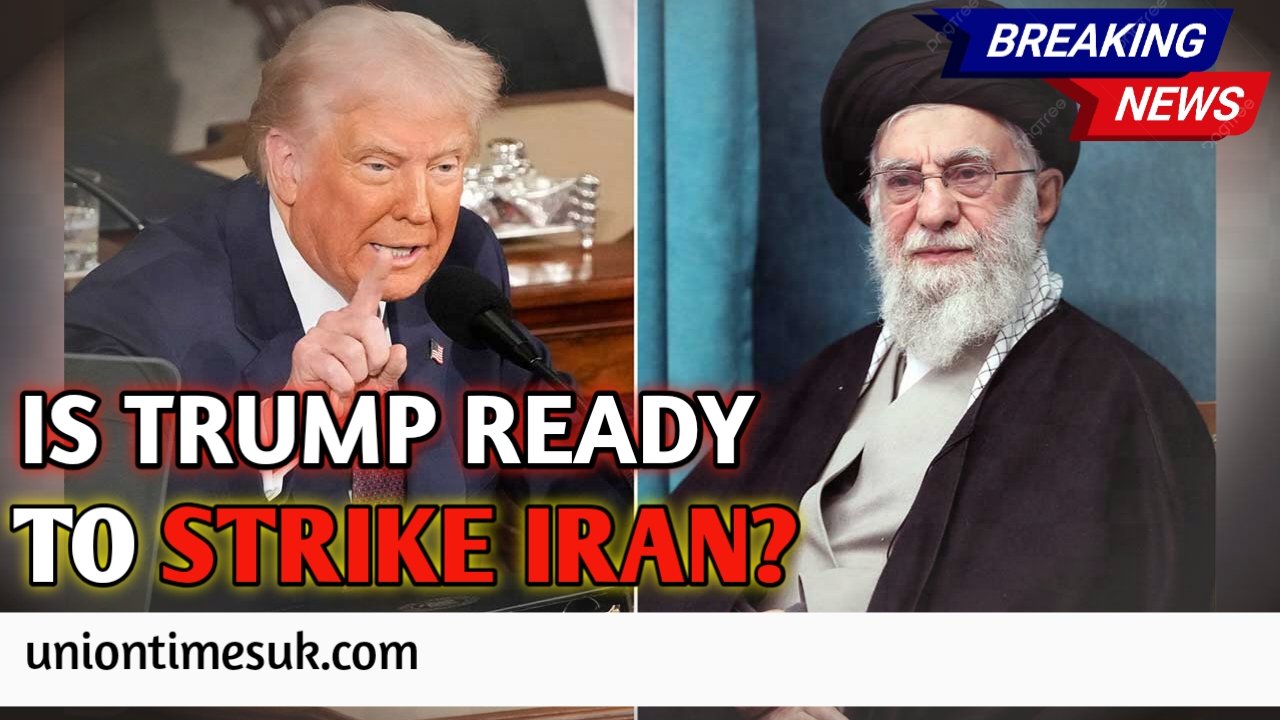
The Brink of Chaos: Will the U.S. Intervene in Iran in 2026?
The year 2026 has begun with a storm. From the streets of Tehran to the briefing rooms of the Pentagon, a high-stakes drama is unfolding. Following the dramatic U.S. military operation in Venezuela earlier this month—which led to the capture of President Nicolas Maduro—the world is now watching to see if “Regime Change” is heading toward the Islamic Republic of Iran.
1. The Domestic Trigger: A Nation in Revolt
The current crisis was sparked on December 28, 2025, when the Iranian Rial collapsed to an all-time low of 1.4 million per U.S. dollar. What began as protests against surging inflation and economic mismanagement has evolved into the most significant challenge to the Iranian government in over three years.
- Casualties & Crackdown: As of January 11, 2026, human rights groups (HRANA) report at least 116 deaths and over 2,600 arrests.
- The Blackout: The Iranian government has imposed a near-total internet and phone blackout to stifle the movement, which has spread to over 180 cities.
- The Crown Prince Factor: Exiled Crown Prince Reza Pahlavi has called for a general uprising, urging citizens to seize city centers, further terrifying the ruling elite.
2. The Trump Doctrine: “Locked and Loaded”
President Donald Trump’s second term has been characterized by a “Peace through Strength” approach that is far more aggressive than many anticipated. His rhetoric regarding Iran has been sharp and consistent:
”If Iran shoots and violently kills peaceful protesters… the United States of America will come to their rescue. We are locked and loaded.” — Donald Trump on Truth Social.
According to leaked reports from the Wall Street Journal and New York Times, the Pentagon has presented the President with a range of military options:
- Targeted Airstrikes: Focus on the Islamic Revolutionary Guard Corps (IRGC) headquarters and communication hubs.
- Nuclear Facility Neutralization: Building on the “bunker buster” strikes carried out in June 2025 against the Fordow plant, the U.S. could aim to permanently dismantle Iran’s enrichment capabilities.
- Non-Military Infrastructure: Sabotage of government-controlled energy and communication assets to assist the protesters.
3. The “Venezuela Model” and the Fear of Russia
The recent U.S. raid in Venezuela has sent shockwaves through Tehran. There are unverified reports that Ayatollah Ali Khamenei, now 86, has prepared a “Plan B” to flee to Moscow, following the path of Syria’s Bashar al-Assad.
However, unlike Venezuela, Iran is a regional heavyweight with a sophisticated missile program. Iran’s Parliament Speaker, Mohammad Baqer Qalibaf, has warned that any U.S. aggression would make both America and Israel “legitimate targets” for immediate retaliation.
4. Probability of Intervention: Factors at Play
|
Direct Invasion |
Low |
Trump remains publicly opposed to “boots on the ground” and long-term occupations. |
|
Airstrikes/Drone Attacks |
High |
High probability if the death toll of protesters continues to rise sharply. |
|
Cyber Warfare |
Certain |
U.S. and Israeli intelligence are already reportedly active in disrupting Iranian command systems. |
|
Regime Collapse (Internal) |
Medium |
Depends |
Global & Economic Fallout
The world economy is watching with bated breath. While global oil markets were forecast to have a surplus in 2026, a conflict in the Strait of Hormuz could change everything:
Oil Prices: Analysts suggest oil could spike past $150 per barrel if the Persian Gulf becomes a war zone.
India’s Position: India has already issued a travel advisory for its citizens. With heavy investments in the Chabahar Port and a large diaspora in the Gulf, India stands to lose significantly from a full-scale conflict.
The “Rogue State” Debate: Some international critics, including those in European capitals, worry that the U.S. is bypassing international law, potentially destabilizing global norms.
6. The “Discover” Factor: Why This Matters Now
This is not just another Middle Eastern skirmish. In 2026, the convergence of economic collapse, high-tech dissent, and an unpredictable U.S. administration has created a “perfect storm.” If the U.S. intervenes, it will be the most significant geopolitical event of the decade, reshaping the map of the Middle East forever.
Conclusion: A Waiting Game
The next 72 hours are critical. If the Iranian security forces launch a “Maximum Pressure” crackdown on the protesters, the U.S. military—already reportedly in a state of “massive build-up” in the region—may pull the trigger on airstrikes.
For the people of Iran, the dream of “Zan, Zendegi, Azadi” (Woman, Life, Freedom) is closer than ever, but the price may be a devastating conflict that draws in the world’s superpowers.